Product included in the register of supplements of the Italian Ministry of Health, code 119120.
INTAKE OF INGREDIENTS PER 1 CAPSULE: Food maltodextrins 200 mg. Food gelatin capsule. Bifidumbacterium lactis BLC1 lyophilisate 25 mg (live cell supply 250 million) Lactobacillus Bulgaricus DSMZ 20081 lyophilisate 5 mg (live cell supply 500 million). Bulking agent: cheese phosphate. Lactobacillus acidophilus SGL11 lyophilisate 5 mg (supply of live cells 500 million), Streptococcus thermophilus SGSt01 lyophilisate 5 mg (supply of live cells 500 million). Anti-caking agents: magnesium salts of fatty acids, silicon dioxide.
LACTORIL is a food supplement based on lactobacilli.
DIRECTIONS FOR USE: 1 capsule a day.
WARNINGS: Keep out of the reach of children under three years of age. Do not exceed the recommended daily dose. The product should be used as part of a varied and balanced diet and a healthy lifestyle.
Available in the best pharmacies, parapharmacies, herbalists.
[content_control roles=”webinar”]
Pathology
Notes
FUNCTIONS OF THE INTESTINAL FLORA: The microflora contributes to the health of the organism through various physiological mechanisms. An important function is to counteract the colonization of the tract by pathogenic bacteria. Some “good” bacteria pass through the mucosal barrier and in a normal person are killed in the lymph nodes and therefore do not spread. This mechanism stimulates the immune system to respond more rapidly to exogenous pathogenic bacteria. At the end of their metabolism, the Bifidobacteria release strong acids which lower the pH and exert an antibacterial action. They regularize the intestinal tract and therefore contribute to eliminating the annoying constipation. Thanks to the studies of the beginning of the century on bacterial flora and intestinal disorders by the Russian biologist Prof. Ilya Ilyich Metchnikov, Nobel Prize, researcher at the Pasteur Institute in Paris. He concluded that birds survive longer than mammals because they lack a colon. It is precisely in this terminal part of the intestine that harmful bacteria develop, which cause serious illnesses, drastically shortening man’s life. The scholar claimed that he could keep the intestine free from harmful bacteria with a constant and regular use of lactic ferments. Con la sua équipe Metchnikov riuscì a separare da un campione di Yogurt proveniente da una popolazione bulgara famosa per la longevità, il bacillo responsabile della fermentazione, che da quel momento in poi verrà chiamato bulgarico, ovvero Lactobacillus bulgaricus. An important function of the physiological bacterial flora determines the maintenance of normal conditions of the vaginal environment, keeping it acidic. This task is, in fact, mainly carried out by the Lactobacilli (in particular the Acidophylus), which work to facilitate the absorption of essential nutrients and vitamins, in particular those of group B and contribute to the production of vitamin K.
THE EFFECTIVENESS OF LACTIC FERMENTS: LACTIC ACID BACTERIA ARE IDEAL FOR “REGENERATING” THE INTESTI. Among their beneficial effects, in fact, we remember: the “barrier” effect against pathogenic germs (cause of diarrhea and infections), the “immune-competent” effect on the digestive immune system, which is also reflected on the general immune system, the “cleansing-detoxification” effect that allows to eliminate waste. According to some doctors and researchers lactic ferments help to alleviate some ailments and reduce virus infections of some dangerous bacilli. Eliminate dysentery caused by bacteria or food imbalances. Regenerate the intestinal bacterial flora during and following antibiotic therapies. Treat oral or skin infections such as eczema, ulcers and grazes. Soothe chronic constipation. Relieve gastro-intestinal disorders. Make up for vitamin deficiencies. Feeding people with severe digestive problems. Replace milk in cases of digestive or allergic problems. Calm states of nervous agitation.
After the respiratory tract, the gastrointestinal tract constitutes the second largest surface area of the human body corresponding to 250-400 m2, comparable in size to a tennis court.
In the gastro-intestinal tract there are 10 indigenous bacteria for every cell in the body, for a total of 1014 bacteria compared to the 1013 cells that make up our body. It has been estimated that bacteria in the gastrointestinal tract divide every 20 minutes. This high number of new mutated bacteria allows the indigenous microflora to quickly adapt to the variation of the gastrointestinal environment. During a normal life, 60 tons of food pass through the digestive tract.
WHEN THE MICROFLORA IS COMPROMISED: environmental factors can compromise the gastrointestinal flora: wrong diet, age, use of stress drugs, defective intestinal mobility. L’alterazione della normale microflora intestinale riduce le difese dell’organismo, altera l’equilibrio esistente tra processi fermentativi e putrefattivi e favorisce lo sviluppo di germi potenzialmente patogeni. The modification of the normal flora, as well as possible local infections, alters the metabolism of bile acids, that of fatty acids, of vitamin B12. The effects are aggravated by a reduction in gastric acidity, by that of intestinal peristalsis and by intestinal stagnation, which contributes to the formation of gas and favors water retention. The bacteria that make up the intestinal flora work continuously and produce gas which, in a reasonable proportion, makes the intestinal peristaltic contractions more effective and reduces the pressure repercussions that the presence of liquids alone would generate during the digestive phase. In some cases, however, it accumulates in excess right in the digestive tract. This can occur due to the lack of absorption of the gas produced by the bacteria and by the transformations of the foods already inside the intestine due to a too rapid peristalsis. When this happens the gas tends to make the abdomen hard and tense and causes pain and bloating.
CANDIDA: when we talk about altered bacterial flora, we must also mention the presence in our body of the saprophyte Candida albicans. Normally present in the vaginal environment, with a pH between 5 and 4, the true residence is the mucosa of the small intestine. However, when the effectiveness of the immune system decreases due to the increase in the presence of endogenous and exogenous toxins, this fungus grows considerably, causing problems for the health of the subject in question. The immune defenses can drop especially in the case of strong or frequent antibiotic treatments, or for drugs that act on the Central Nervous System. For a Candida infection, chronic fatigue syndromes, hyperactivity, depression, anxiety, bulimia, anorexia can occur. The enormous increase in people allergic and intolerant to some foods is related to the modification that candidiasis induces on the immune responses and to the modifications of the permeability of the small intestine mucosa.
ANTIBIOTIC USE: probiotics, live microorganisms such as Lactobacillus acidophylus or Streptococcus thermophylus, are used to prevent diarrhea that occurs as a complication during antibiotic therapy. The results of a study by the medical faculty of the Imperial College School of Medicine published in the British Medical Journal, indicate that probiotics can be used to prevent diarrhea associated with the use of antibiotics. Further studies are needed to evaluate the efficacy of probiotics alone in treating this diarrhea once it has started. In nine different clinical trials they were given to people who needed antibacterial therapy, antibiotics and placebos or antibiotics and microorganisms (probiotics) together. People who had initially taken antibiotics together with probiotics had a significantly lower incidence of diarrhea than those who had not taken microorganisms. The microorganisms used in the various studies were lactobacilli, or streptococci. Antibiotic-induced diarrhea is a side effect of frequent, though often misunderstood, antibiotic therapy. It is estimated that up to 30% of patients undergoing antibiotic treatment are subject to them. Complication can arise early, that is, during the treatment itself or late, that is, up to two months after discontinuation of therapy. It can be of moderate severity, but also fulminant, as in the case of pseudomembranous colitis, with shock or rupture of the intestine. The latter form generally concerns very debilitated patients admitted to hospital for other serious pathologies and subjected to intense and protracted antibiotic therapy. Diarrhea and the resulting dehydration is always dangerous, especially for the elderly, for those who are in any case debilitated, for the immunosuppressed and for children, especially those who are less than 10 years old and weigh less than 25 kilos. This complication occurs due to the alteration of the ecosystem present in the intestine. Antibiotics, by whatever route they are taken, not only oral, but also intramuscularly or intravenously, in addition to eliminating the germs for which they are indicated, kill or alter the good intestinal flora, the one that coexists in perfect harmony with our organism and allows the maintenance of the normal trophism of the intestinal mucosa. It has been calculated that for every gram of intestinal content we normally host around 100 billion beneficial intestinal microorganisms. When the balance of this multitude of germs is disturbed, other microorganisms generally kept at bay can prevail and cause diarrhoea. Furthermore, the normal metabolism of the intestinal flora can also be altered by the use of antibiotics, with problems in the metabolization of sugars and bile acids and consequent diarrheal syndrome. The antibiotics that most frequently cause this type of problem are penicillins, combinations of penicillins and clavulonic acid and cephalosporins. The microorganisms available today to prevent the appearance of diarrhea are many. Lactobacillus acidophylus, Lactobacillus bulgaricus, Bifidumbacterium bifidus and Streptococcus thermophilus have been tested in various studies as antidiarrheals. Although the researchers remind us that more patient series are needed to say a definitive word on the use of probiotics in this type of diarrhea, however it is now known that probiotics can prevent this complication during antibiotic therapy and hence the suggestion, especially for people most at risk, such as the elderly and children, to take them from the start of antibiotic therapy, which was necessary. In fact, there are still no contraindications to the use of these agents.
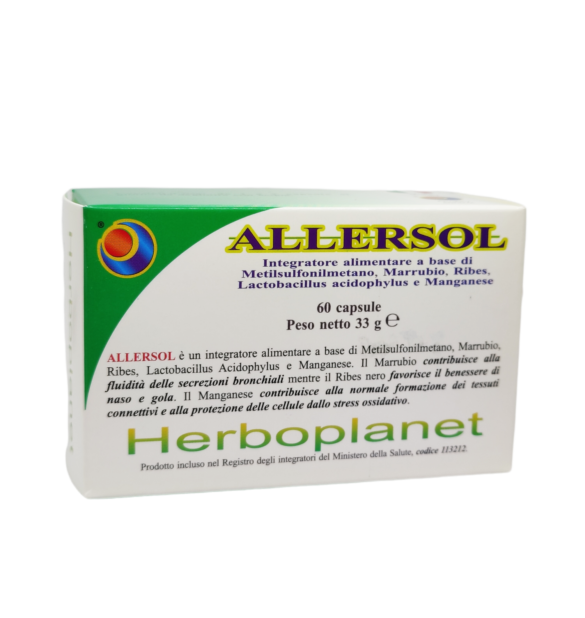
COMPLEMENTARY REMEDIES: ENZYSOL, ALLERSOL, METEORSOL, DEFENSOL
[/content_control]